
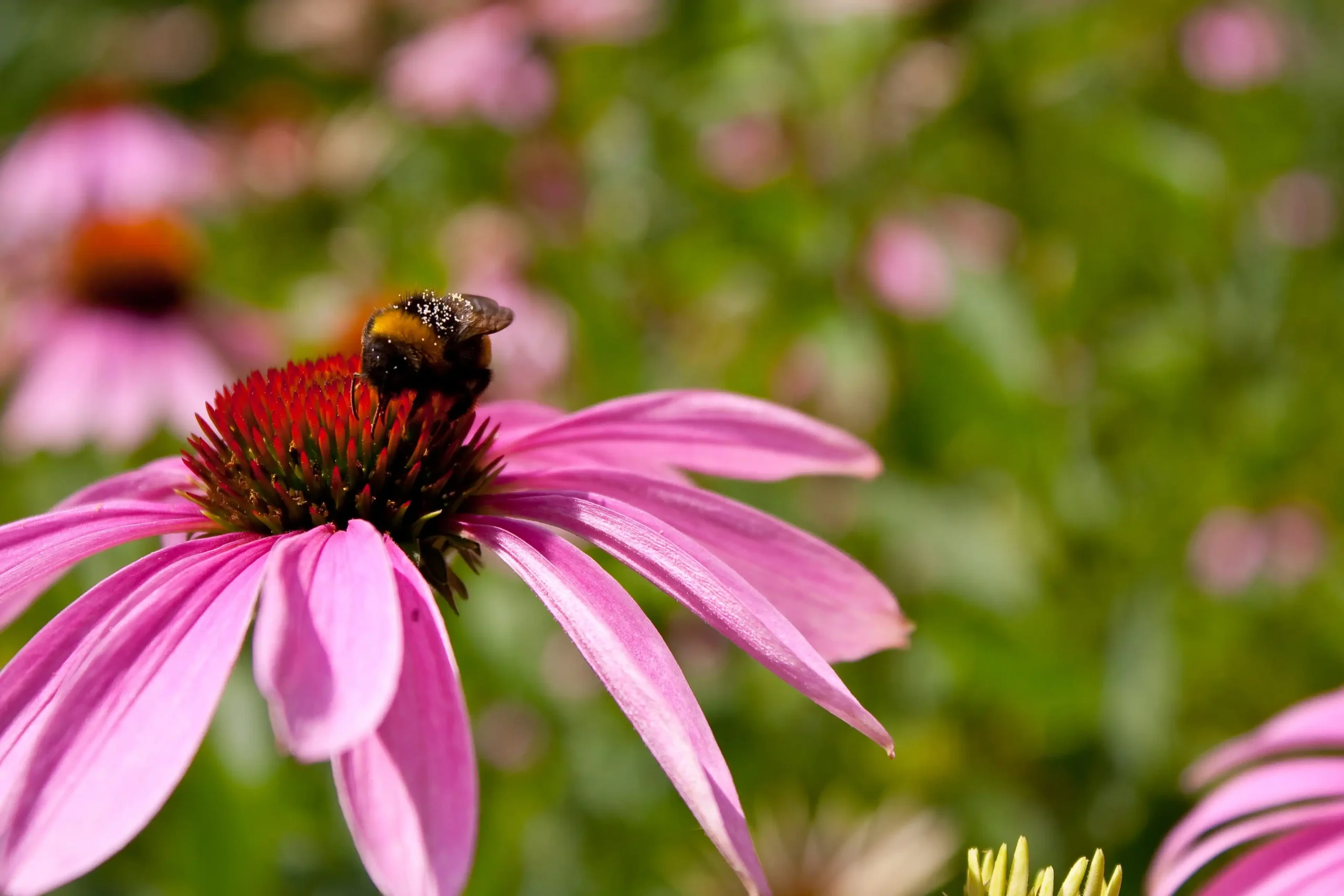
Echinacea, commonly called purple coneflower, is a hardy perennial that thrives in full sun and average, well-drained soil. It needs regular watering during its first season, then becomes drought-tolerant once established. It blooms in its second year, attracts pollinators and goldfinches, and needs minimal feeding or maintenance to thrive for years.
If you want a perennial that rewards very little effort with months of blooms and a steady stream of bees, butterflies, and hummingbirds, echinacea is hard to beat. It’s native to the central and eastern United States, tolerates heat and short dry spells without complaint, and comes back reliably year after year once it’s settled in.
Choosing the Right Species
Echinacea is the genus name; purple coneflower refers specifically to Echinacea purpurea, the most common and forgiving species for home gardens.
- Echinacea purpurea: Easiest to grow, most adaptable, best choice for most backyard gardens
- Echinacea angustifolia: Slower-growing, prefers sharper drainage, more often grown for herbal use
- Echinacea paradoxa: Yellow petals, sometimes used in breeding new cultivars
For color and pollinator support without much fuss, stick with E. purpurea or one of its named varieties like Magnus, PowWow Wild Berry, or White Swan.
Planting
- Sunlight: Full sun produces the strongest stems and heaviest blooms; light afternoon shade is fine in very hot climates
- Soil: Average, well-drained soil — echinacea actually performs worse in rich, heavily fertilized soil, which encourages leafy growth at the expense of flowers
- Spacing: 18 to 24 inches apart so clumps can fill in without crowding each other
- Planting from seed: Sow seeds on the soil surface without covering them, since they need light to germinate; keep the soil lightly moist until seedlings establish
- Planting transplants: Dig a hole twice as wide as the pot, and set the rootball level with the surrounding soil
Watering
Water regularly through the first growing season while roots are establishing. After that, echinacea becomes genuinely drought-tolerant and only needs water during extended dry spells — overwatering established plants does more harm than under-watering them.
Feeding and Maintenance
A light layer of compost in spring is typically all echinacea needs. Deadheading isn’t required, since many varieties bloom continuously without it, and leaving spent flower heads standing into fall provides seeds that goldfinches and other birds rely on through winter.
Divide established clumps every three to four years to keep plants vigorous — this also gives you free plants to fill in other parts of the garden.
When to Expect Blooms
Echinacea typically doesn’t bloom in its first year. Instead, it puts its energy into building a strong root system and basal leaves. Blooms usually appear starting in the second year, from midsummer through frost, and become more abundant as the plant matures.
Common Problems
- Missing flower stalks in year one: Normal — the plant is establishing roots, not underperforming
- Waterlogged soil: Echinacea doesn’t tolerate consistently wet or soggy soil; drainage matters more than fertility
- Weed competition: Young plants can be outcompeted by weeds before their root systems are established, so keep the area around new plantings clear
FAQs About Echinacea
How long does it take for echinacea to bloom?
Echinacea typically doesn’t bloom in its first year, since it’s focused on establishing roots and foliage. Blooms usually begin in the second year and continue from midsummer through frost.
Is echinacea the same as purple coneflower?
Echinacea is the genus name. Purple coneflower specifically refers to Echinacea purpurea, the most common and easiest-to-grow species within that genus.
Does echinacea need a lot of water?
Only during its first growing season while it’s establishing. Once mature, echinacea is drought-tolerant and only needs supplemental watering during extended dry periods.
Should I cut back echinacea in fall?
It’s optional. Deadheading isn’t necessary for continuous blooming, and leaving spent flower heads standing provides seeds for goldfinches and other birds through the winter.
Final Thoughts
Echinacea is close to a set-it-and-forget-it perennial once established: full sun, decent drainage, and a bit of patience in year one is really all it asks for. In exchange, you get months of blooms, a garden full of pollinators, and — if you leave the seed heads standing — a natural bird feeder heading into winter.