
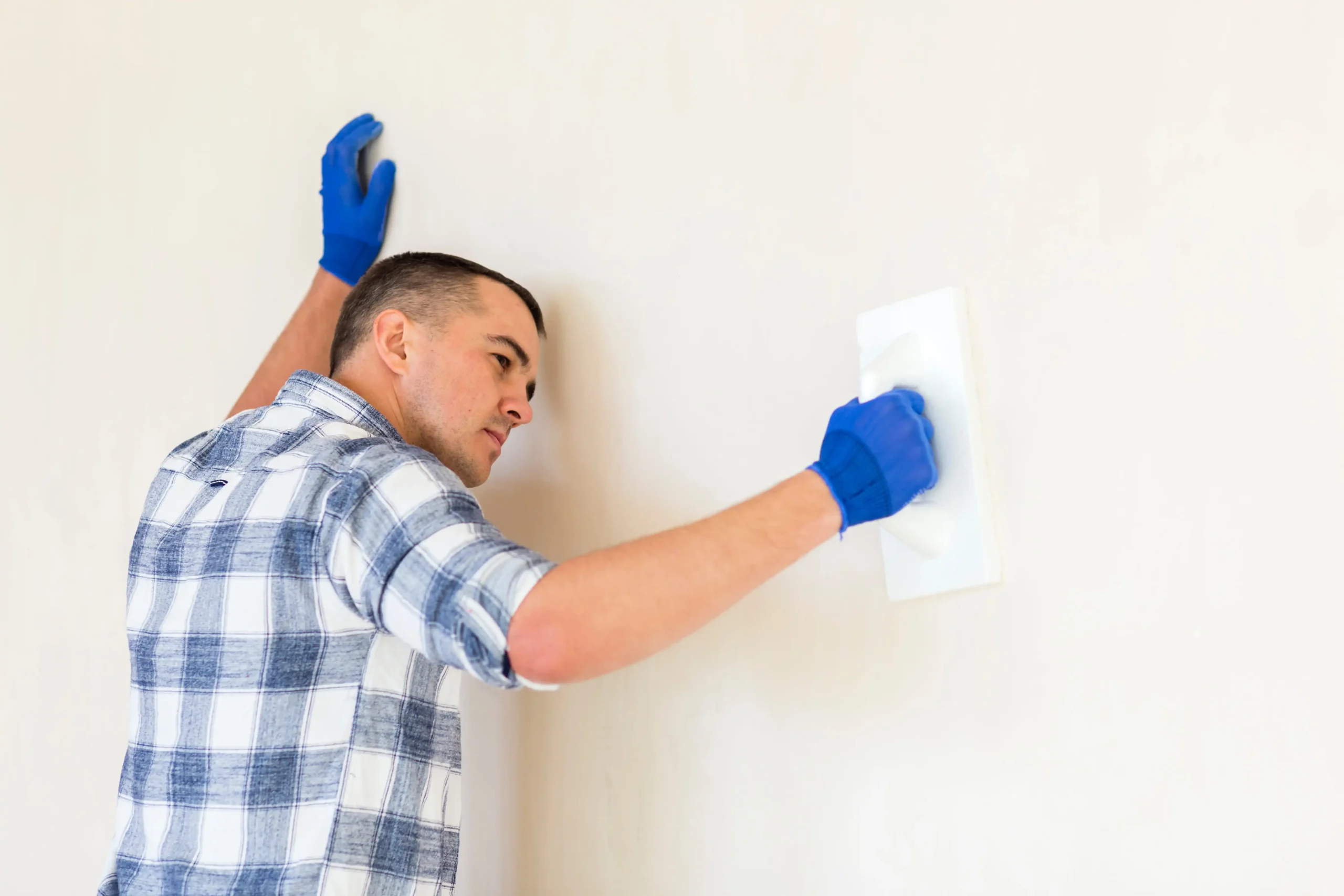
How to patch a hole in drywall depends on the size. For nail holes and small dents, spackle and a putty knife are enough. For holes up to about 4 inches, use a self-adhesive mesh patch covered with joint compound, feathered at the edges and sanded smooth. For holes larger than 4–6 inches, cut out the damaged section, add backer board or drywall clips, and fit a new drywall patch before applying joint compound and sanding.
Almost every home ends up with a hole in a wall eventually: a doorknob dent, a removed shelf anchor, or something bigger from moving furniture. The good news is that learning how to patch a hole in drywall is genuinely a beginner-friendly repair once you match the right method to the size of the damage.
Tools and Materials You’ll Need
- Sandpaper or a sanding block
- Spackling paste (for small holes) or joint compound (for larger repairs)
- A putty knife or flexible drywall knife
- Self-adhesive mesh patch (for medium holes)
- A scrap piece of drywall, backer board, or drywall clips (for large holes)
- A stud finder
- A utility knife or drywall saw
- Primer and matching paint for the final touch-up
How to Patch a Hole in Drywall: Small Holes (Nail Holes, Screw Holes)
These are the easiest repairs and take just a few minutes plus drying time.
- Sand the area around the hole smooth to remove any loose debris.
- Load a bit of spackling paste onto your putty knife and apply it directly over the hole, working it into a small mound.
- Press the flat side of the knife firmly against the mound to flatten it level with the wall.
- Swipe the blade across the patched area in a broad motion so it sits flush with the surrounding drywall.
- Let the spackling dry fully — check the product packaging for exact drying time — then sand lightly and touch up with paint.
How to Patch a Hole in Drywall: Medium Holes (Up to 4 Inches)
Holes from wall anchors, doorknobs, or removed fixtures usually fall in this range, and need a bit more reinforcement than spackle alone provides.
- Sand the area around the hole and wipe away dust so the patch adheres cleanly.
- Cut a self-adhesive mesh patch about an inch larger than the hole on all sides.
- Press the patch firmly over the hole, smoothing out any air bubbles.
- Using a flexible drywall knife, spread joint compound over the patch in a crisscross pattern so the compound grips fully into the mesh.
- Feather the edges — apply more pressure as you move toward the outer edge of the patched area — so the compound blends smoothly with the surrounding wall instead of leaving a visible ridge.
- Let it dry completely, then sand smooth. Apply a second thin coat if any texture or dips remain, sanding between coats.
- Prime and paint to match the rest of the wall.
How to Patch a Hole in Drywall: Large Holes (Over 4–6 Inches)
Larger holes need an actual piece of new drywall rather than just compound and mesh.
- Locate the studs near the damaged area with a stud finder — you’ll need to attach the new patch to something solid.
- Mark and cut out the damaged section. Draw a square or rectangle around the hole using a carpenter’s square, extending the cut to the center of a stud on at least one side if possible. Cut along the lines with a drywall saw or utility knife.
- Add backing support. If the cutout doesn’t land on a stud on both sides, screw in backer boards (scrap wood a few inches longer than the hole) behind the drywall on either side to give the new patch something to attach to.
- Cut and fit a new drywall patch to match the cutout size exactly.
- Screw the patch into place, sinking the screws slightly below the surface so they can be covered with compound.
- Tape the seams. Press paper or mesh drywall tape into a bed of joint compound over every seam where the patch meets the original wall.
- Apply joint compound over the tape, then let dry and apply a second coat that extends a few inches beyond the first, tapering the edges outward.
- Sand and finish. Once fully dry, sand smooth with fine-grit sandpaper, then prime and paint.
Alternative for Very Large Holes: Drywall Clips
If you don’t want to deal with cutting backer boards, drywall repair clips are a faster alternative for large holes. They install around the perimeter of the hole and give the new drywall patch something to screw into without needing exposed studs on both sides — genuinely useful if the damage doesn’t line up conveniently with your wall studs.
Common Mistakes to Avoid
- Skipping the sanding step — patches don’t adhere as well to dusty or uneven surfaces
- Applying compound too thick in one coat — thin, multiple coats dry more evenly and are easier to sand smooth
- Not feathering the edges — a patch that isn’t feathered leaves a visible raised outline once painted
- Cutting into a wall without checking for wires or pipes first — always check before cutting into any section larger than a couple inches
FAQs About How to Patch a Hole in Drywall
What’s the easiest way to patch a small hole in drywall?
For nail or screw holes, spackling paste and a putty knife are all you need. Apply it directly over the hole, smooth it flat, let it dry, then lightly sand and touch up with paint.
How big of a drywall hole can spackle fix on its own?
Spackle works well for holes about ¼ inch or smaller. Anything larger, even up to a few inches, generally needs a mesh patch and joint compound for a durable repair.
Do I need to find a stud to patch a large hole in drywall?
Yes, ideally. The new drywall patch needs to be screwed into something solid — either an exposed stud or backer boards installed behind the drywall if a stud isn’t available on both sides of the hole.
How long does joint compound take to dry before sanding?
Most joint compound needs about 24 hours to fully dry before sanding, though this varies by product and humidity — always check the specific drying time on the packaging.
Final Thoughts
Once you know how to patch a hole in drywall for each size category, this becomes one of the least intimidating home repairs to handle yourself. Small and medium holes are genuinely a 20-minute job plus drying time, and even a larger patch is manageable with basic tools and a bit of patience — no specialized skill required beyond following the steps in order.
For the rest of your home’s regular upkeep beyond wall repairs, our deep cleaning checklist covers what to tackle room by room. This is one of several basic home repairs every homeowner should know — see the full guide for more.