
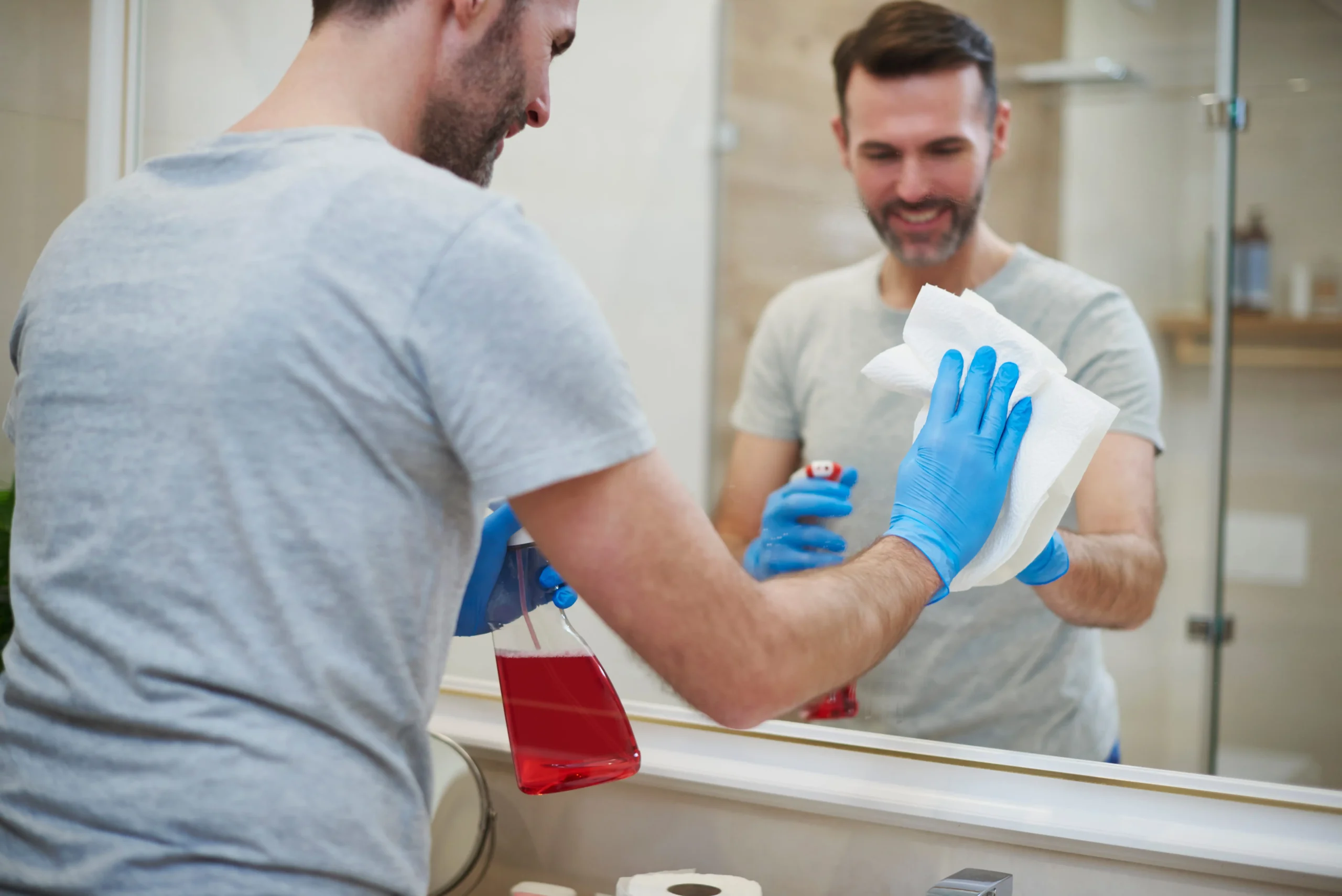
To get rid of mold in a bathroom, spray the affected area with a bleach solution (1 part bleach to 2 parts water) or a natural alternative like vinegar or a baking soda paste, let it sit for 10–15 minutes, scrub with a stiff brush, and rinse. To stop it coming back, run the exhaust fan during and after showers, fix any leaks, and improve overall ventilation. Mold always returns if the moisture problem isn’t fixed alongside the cleaning.
If you’re dealing with mold in your bathroom, you’re not alone — it’s one of the most common complaints in home cleaning, and for a simple reason: bathrooms combine constant moisture with limited airflow, which is exactly what mold needs to grow. The good news is that knowing how to get rid of mold in bathroom spaces properly means most cases can be handled yourself, without calling in a professional.
Why Bathrooms Get Moldy in the First Place
Mold needs three things to grow: moisture, a food source (soap residue, dust, or organic material), and a lack of airflow. Bathrooms check every box: showers create humidity, grout and caulk trap moisture, and many bathrooms have weak or no ventilation. Leaky faucets, dripping pipes, or a poorly sealed shower door only make it worse by adding a constant water source.
Understanding this is the first step in learning how to get rid of mold in bathroom areas permanently, rather than just wiping it away for a few weeks until it returns.
What You’ll Need Before You Start
- Rubber gloves
- Protective eyewear
- An N-95 mask or respirator (mold spores are genuinely harmful to breathe in repeatedly)
- A stiff-bristled brush or old toothbrush for grout lines
- A spray bottle
- Your chosen cleaner: bleach, vinegar, hydrogen peroxide, or baking soda
- A portable fan for ventilation while you work
Never mix bleach with vinegar or ammonia-based cleaners — the combination produces toxic fumes that can seriously affect your lungs and eyes.
Step-by-Step: How to Get Rid of Mold in Bathroom Surfaces
Step 1: Ventilate the Room
Open a window if you have one, turn on the exhaust fan, and set up a portable fan for extra airflow. This isn’t optional; good ventilation protects you while cleaning and helps the surface dry faster afterward.
Step 2: Choose Your Cleaning Solution
- Bleach solution: Mix 1 part bleach with 2 parts water in a spray bottle. Effective on hard, non-porous surfaces like tile, porcelain, and glass.
- Vinegar: Undiluted white vinegar works well as a milder, non-toxic option, particularly for smaller mold patches.
- Baking soda paste: Mix ½ cup baking soda with a few teaspoons of water into a spreadable paste — good for scrubbing tough spots without harsh chemicals.
- Hydrogen peroxide: A 3% solution can be sprayed directly on mold as an alternative to bleach.
Step 3: Apply and Let It Sit
Spray or apply your chosen solution generously over the moldy area. Let it sit for 10 to 15 minutes so the solution has time to break down the mold rather than just sitting on the surface.
Step 4: Scrub Thoroughly
Using your stiff brush or old toothbrush, scrub the area — pay particular attention to grout lines, corners, and any textured surface where mold likes to hide and regular wiping can’t reach.
Step 5: Rinse and Dry Completely
Rinse the area with warm water using a cloth, spray bottle, or the showerhead itself. This last step matters more than people expect: leaving any surface damp after cleaning gives mold an immediate head start on coming back. Dry thoroughly with a towel or paper towel.
Step 6: Re-Caulk if Needed
If mold had worked its way into old caulk around the tub or shower, cleaning the surface won’t fully solve it — the caulk itself needs to be removed and replaced. Re-caulking after a deep clean gives mold one less porous surface to take hold in.
How to Get Rid of Mold in Bathroom Grout Specifically
Grout is one of the hardest spots to fully clean because of how porous it is. A baking soda paste left to sit for a full 20 minutes, followed by hard scrubbing with a stiff brush, tends to work better here than a quick spray-and-wipe. For grout with mold that keeps returning despite cleaning, a grout sealer applied after the area is fully clean and dry can prevent moisture from soaking back in.
When Mold Is Too Big to Clean Yourself
Most surface mold on tile, grout, or caulk is safe to handle on your own. However, if mold covers an area larger than about 10 square feet, or has spread into drywall, insulation, or behind a wall, it’s time to call a professional mold remediation service rather than continuing DIY treatment. Mold hidden inside walls can’t be fully removed by surface cleaning, and disturbing it yourself risks spreading spores throughout the rest of your home.
How to Prevent Mold From Coming Back
Cleaning existing mold only solves half the problem — if the underlying moisture issue isn’t fixed, it will return within weeks. These habits make the biggest difference long term:
- Run the exhaust fan during every shower and leave it running for 15–20 minutes afterward
- Fix leaks promptly — dripping faucets, slow leaks under the sink, or a poorly sealed shower door all feed mold growth
- Squeegee the shower walls after each use to cut down on standing moisture
- Keep a small dehumidifier running in bathrooms with weak ventilation
- Wash bath mats and shower curtains regularly, since damp fabric is another common hiding spot
For the rest of your bathroom’s regular upkeep, our deep cleaning checklist covers the weekly and monthly tasks that help catch moisture problems before mold has a chance to establish itself.
FAQs About How to Get Rid of Mold in the Bathroom
What kills bathroom mold permanently?
No single product “permanently” kills mold if moisture issues aren’t addressed. A bleach solution, vinegar, or hydrogen peroxide will remove existing mold effectively, but permanent prevention comes from fixing ventilation and moisture sources afterward.
Is vinegar or bleach better for bathroom mold?
Bleach is more effective on tough, established mold on hard non-porous surfaces. Vinegar is a milder, non-toxic option that works well for smaller or newer mold patches and is safer to use regularly.
Why does bathroom mold keep coming back after cleaning?
If the room still has poor ventilation, ongoing leaks, or high humidity, mold will regrow within weeks even after a thorough cleaning, since the underlying conditions it needs haven’t changed.
When should I call a professional for bathroom mold?
If mold covers more than roughly 10 square feet, has spread into drywall or behind tile, or keeps returning despite repeated cleaning, a professional mold remediation service is safer and more effective than continued DIY treatment.
Final Thoughts
Knowing how to get rid of mold in bathroom spaces isn’t complicated, but it does require doing both halves of the job — actually removing the mold, and fixing the moisture problem that let it grow in the first place. Skip either step, and you’ll be back here in a month dealing with the same patch again.