The fastest ways to make a small living room look bigger are using light, reflective colors, hanging curtains close to the ceiling, choosing fewer and larger furniture pieces instead of many small ones, adding a large mirror opposite a window, and keeping the floor as visible as possible. None of these require a renovation or new square footage.
A small living room decorating doesn’t have to feel small. The size of the room is fixed, but how big it feels depends almost entirely on light, color, scale, and what you choose to put in it. The tricks below are the ones designers actually reach for — not just Pinterest-board ideas, but changes that make a measurable difference in how a room reads.
1. Stick to Light, Reflective Wall Colors
Dark walls absorb light and visually shrink a room’s boundaries. Soft whites, warm beiges, and pale greys bounce light around instead of soaking it up, which pushes the walls back visually. If you want color, keep it light and use the same shade on every wall — an accent wall in a small room draws the eye to where the space ends, making the room feel smaller, not bigger.
2. Maximize Natural Light
Heavy drapes and blinds block the one thing that makes a small room feel open. Swap them for sheer curtains or light-filtering shades that let light through while keeping some privacy. If your windows are older or poorly insulated, upgrading to ENERGY STAR certified windows lets in more usable daylight without the heat loss or glare that leads people to keep curtains shut in the first place.
3. Hang Curtains Near the Ceiling
Mount curtain rods a few inches below the ceiling instead of directly above the window frame. This draws the eye upward, makes the ceiling feel taller, and tricks the room into feeling larger — even though the window itself hasn’t changed size.
4. Choose Fewer, Larger Furniture Pieces
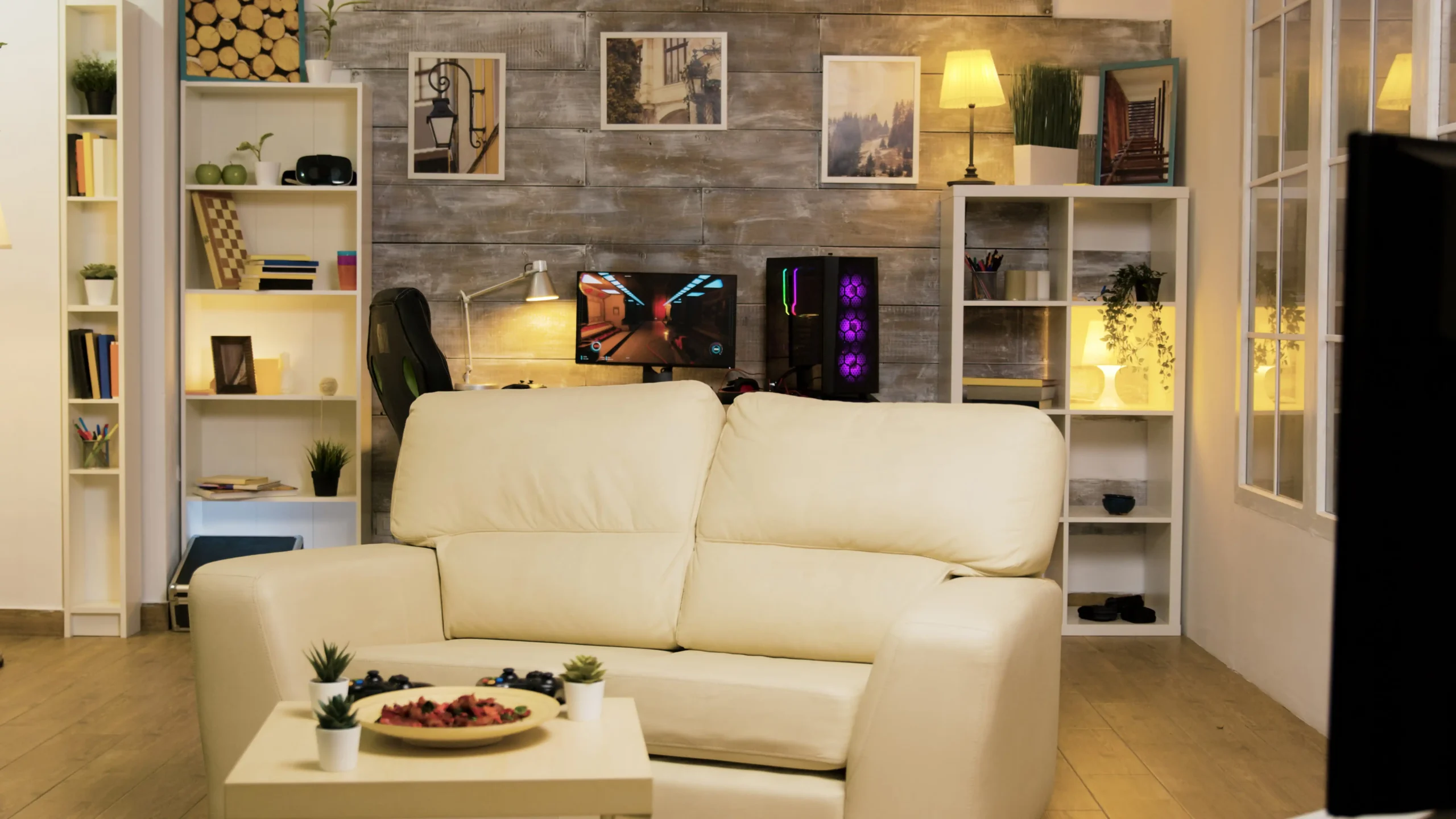
It’s tempting to fill a small room with smaller furniture, but the opposite works better. A few appropriately scaled, larger pieces read as intentional and open. Many small pieces crowd the floor and create visual clutter, which is what actually makes a room feel cramped.
5. Keep the Floor Visible
The more floor you can see, the bigger a room feels. Choose furniture with visible legs instead of pieces that sit flush to the ground, and resist the urge to push furniture against every wall. Leaving a little breathing room around each piece opens up sightlines across the room.
6. Add a Large Mirror
A large mirror placed opposite a window reflects natural light back into the room and visually doubles the sense of depth. This is one of the most reliable tricks in small-space design — it costs one piece of furniture and delivers a noticeably brighter, larger-feeling room.
7. Use Vertical Space
Draw the eye upward with tall bookshelves, floor-to-ceiling curtains, or artwork hung slightly higher than eye level. Vertical lines emphasize ceiling height, which reads as spaciousness even when the floor plan hasn’t changed.
8. Declutter Before Decorating
No design trick works if the room is full of stuff. Sort through what’s currently in the space — keep, store elsewhere, donate, or discard — before adding anything new. A cluttered small room will always feel smaller than an empty large one, so this step matters more than any product you buy. If you’re tackling the whole house, not just the living room, our deep cleaning checklist is a good place to start the reset.
9. Layer in Multifunctional Furniture
An ottoman that opens for storage, a coffee table with a shelf underneath, or a sofa bed for guests all let you skip extra pieces of furniture entirely. Fewer standalone items means more open floor space without sacrificing function.
10. Go Bold with One Statement Piece
Counterintuitively, one large piece of art, a patterned rug, or a bold accent chair can make a small room feel more spacious than several small, timid decor choices. A single strong focal point gives the eye somewhere to land, while lots of small competing details make a room feel busy and cramped.
11. Match Your Rug to the Room, Not the Furniture
A rug that’s too small for the seating area makes the whole layout look disconnected and shrinks the perceived size of the room. As a rule, a rug should be large enough for at least the front legs of your furniture to sit on it.
12. Use Glass and Mirrored Furniture
A glass coffee table or mirrored side table takes up physical space without visually taking up space — light passes through or reflects off them instead of being blocked. This is a simple swap that keeps function without adding visual weight.
13. Paint Trim the Same Color as Walls
When trim is painted a contrasting color from the walls, it visually chops the room into segments. Painting trim, walls, and even ceiling in the same or a very close shade removes those visual breaks and makes the whole room read as one continuous, larger space.
14. Avoid Overly Busy Patterns
Small, densely repeated patterns on curtains, rugs, or upholstery can make a small room feel visually noisy and cramped. If you want pattern, choose one larger-scale design and keep everything else simple.
15. Let Furniture Float Slightly Off the Walls
Pushing every piece flush against the walls is a common instinct in small rooms, but floating furniture a few inches away — even just a couch pulled two inches forward — creates a shadow line that adds depth and makes the room feel more considered rather than boxed in.
Key Takeaways
- Light, uniform wall color reads bigger than dark or accent-walled rooms
- Fewer, larger furniture pieces beat many small ones
- A large mirror opposite a window is one of the highest-impact, lowest-cost changes
- Decluttering before decorating matters more than any single product
- Vertical elements (tall curtains, tall shelving) emphasize ceiling height and spaciousness
FAQs About Small Living Room Decorating Ideas
What is the cheapest way to make a small living room look bigger?
Decluttering is free and has the biggest immediate impact. After that, hanging curtains closer to the ceiling and adding a mirror opposite a window are low-cost changes with a large visual payoff.
Does paint color really make a room look bigger?
Yes. Light, reflective colors bounce light around a room and soften where the walls “end” visually. Dark colors absorb light and make boundaries feel closer, which shrinks the perceived size of the space.
Should I use small furniture in a small living room?
No. Fewer, larger, appropriately scaled pieces generally make a small room feel more open than many small pieces, which create visual clutter and crowd the floor.
Where should I hang a mirror to make a room look bigger?
Directly across from a window works best, since it reflects natural light back into the room and adds a sense of depth.
Final Thoughts
None of these changes require knocking down a wall or adding square footage. Most small living rooms feel cramped not because of their actual size, but because light, color, and furniture choices work against the space rather than with it. Start with decluttering and one or two of the higher-impact changes — a large mirror, lighter walls, curtains hung higher — and the room will already feel noticeably different before you’ve spent much at all.