
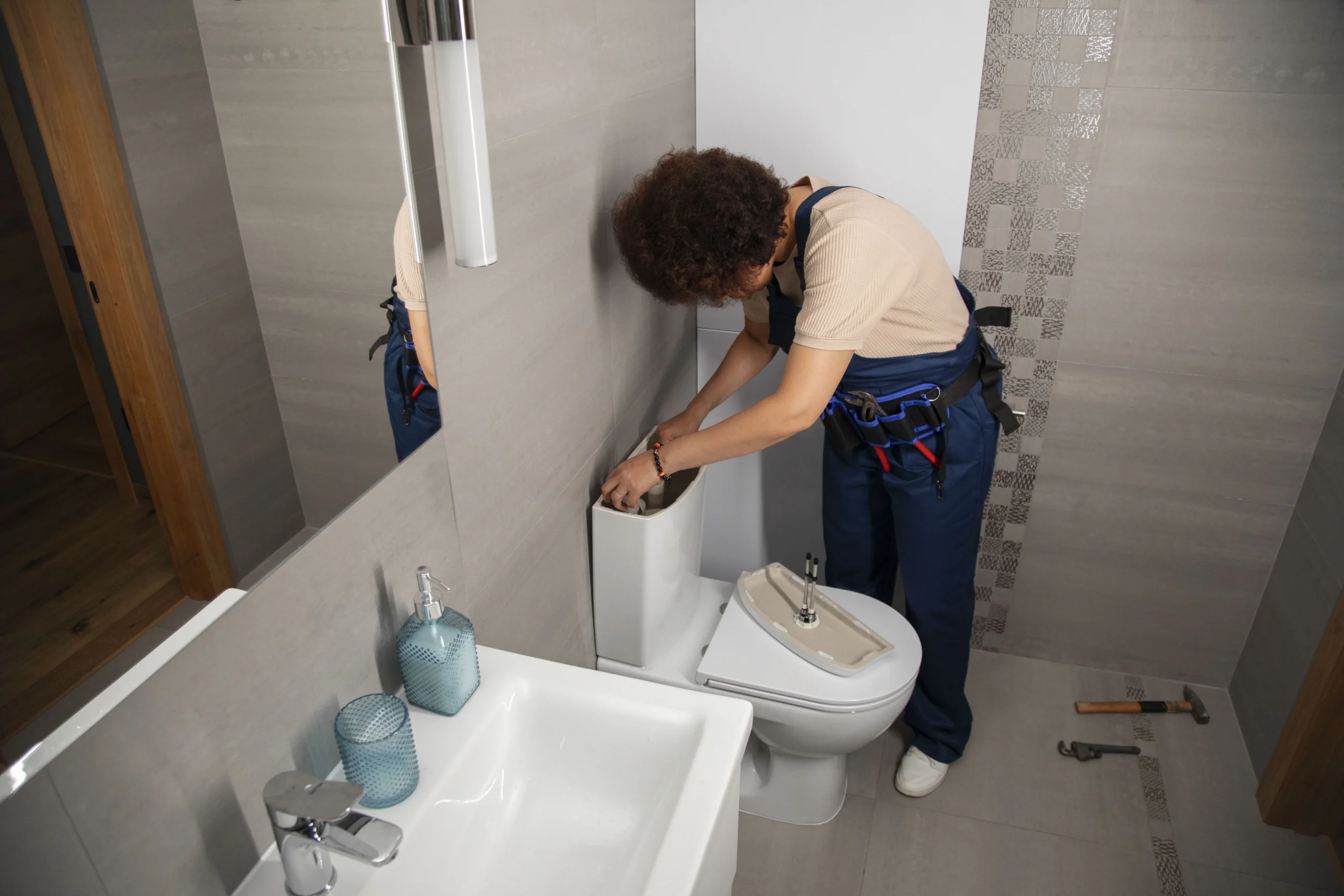
To fix a running toilet, first figure out whether the sound comes from water leaking into the bowl (usually a worn flapper) or the tank continuously refilling (usually a fill valve or float issue). Replacing a worn flapper resolves most cases; if the tank keeps filling even after replacing the flapper, the fill valve or float needs adjusting or replacing instead.
That constant hissing or trickling sound from the toilet isn’t just annoying — a running toilet can waste hundreds of gallons of water a day. The good news is that learning how to fix a running toilet almost always comes down to one of two parts: the flapper or the fill valve, and both are inexpensive, beginner-friendly repairs.
Step 1: Diagnose What’s Actually Happening
Before opening the tank, listen and observe carefully:
- Water flushing quickly through the bowl, tank refilling often: Usually points to a stuck or worn flapper
- The tank continuously filling, even after it should be full: Usually points to a fill valve or float problem
- Water running on and off at random times: Usually a slow leak from the flapper or flush valve seat
- Water visible on the floor around the toilet: Suggests a leak at the tank-to-bowl connection or a supply line fitting, not the internal parts
This diagnosis step matters, since fixing the wrong part wastes time and money on parts you didn’t actually need.
How to Fix a Running Toilet Caused by the Flapper
The flapper is the rubber piece at the bottom of the tank that seals water in between flushes. When it wears out or doesn’t seal properly, water slowly leaks into the bowl, and the fill valve keeps kicking on to compensate — which is what creates that intermittent running sound.
Quick Test
Push down gently on the flapper with a stick or your hand (careful, the water is clean tank water). If the running noise stops immediately, the flapper is your problem.
Replacing the Flapper
- Turn off the water supply valve behind the toilet, turning it clockwise
- Flush the toilet and hold the handle down to drain as much water from the tank as possible
- Detach the chain connecting the flapper to the flush handle
- Unhook the flapper’s ears or tabs from the pegs on the flush valve, and lift it out
- Take the old flapper with you when buying a replacement, or note the exact size and shape — flappers vary between toilet models and an ill-fitting one won’t seal properly
- Install the new flapper, hooking its ears back onto the flush valve pegs
- Reattach the chain to the flush lever, leaving a small amount of slack — too tight and the flapper can’t fully close, too loose and the chain can get caught underneath it
- Turn the water supply back on slowly and flush to test
If a new flapper doesn’t solve the issue, the flush valve seat underneath it may be rough or pitted, preventing a proper seal even with new rubber. A flapper kit that includes a replacement seat (installed with adhesive over the damaged one) can fix this without replacing the entire flush valve assembly.
How to Fix a Running Toilet Caused by the Fill Valve
If the flapper checks out fine but the tank keeps running or refilling excessively, the fill valve (sometimes called a ballcock) is the likely cause.
Checking the Water Level
Look inside the tank — the water level should sit about an inch below the top of the overflow tube. If it’s higher, water continuously spills into the overflow tube, which the fill valve interprets as a permanent low-water signal, keeping it running.
Adjusting the Fill Valve
Most fill valves have an adjustment screw or clip that lets you lower the float, which controls when the valve shuts off:
- Locate the adjustment screw on top of the fill valve assembly
- Turn it to lower the water shutoff level, typically about an inch below the overflow tube
- Flush and observe whether the tank now stops filling at the correct level
Replacing the Fill Valve
If adjusting doesn’t help, the fill valve itself may be worn out internally, even if it looks fine from the outside.
- Turn off the water supply and drain the tank
- Disconnect the water supply line from the base of the fill valve
- Remove the mounting nut holding the fill valve to the tank, and lift the old valve out
- Install the new fill valve, following the height adjustment instructions included with it — most are adjustable to fit different tank sizes
- Reconnect the water supply line and turn the water back on
- Flush and check that the tank fills to the correct level and shuts off properly
Testing for a Slow Leak
If nothing seems obviously stuck or broken, but you suspect a slow leak:
- Flush the toilet and let the tank fill completely
- Mark the water level with a pencil on the inside of the tank
- Turn off the water supply and wait 20 to 25 minutes
- If the water level has dropped below your pencil mark, something in the tank is leaking — most likely the flapper or flush valve seal
When to Call a Plumber
Most running toilet issues are DIY-friendly and inexpensive to fix. If you’ve replaced the flapper and fill valve and the toilet is still running, or if you’re seeing water pooling around the base of the toilet itself (rather than just tank noise), it’s worth calling a plumber to check for a more serious issue like a cracked tank or a failing wax ring seal.
For more everyday home maintenance, our deep cleaning checklist covers the routine bathroom upkeep that helps catch small plumbing issues early.
FAQs About How to Fix a Running Toilet
How do I know if my toilet’s running problem is the flapper or the fill valve?
Push down on the flapper — if the running noise stops immediately, it’s the flapper. If the noise continues or the tank keeps overfilling even with a good flapper, the fill valve or float is the likely cause.
How much water does a running toilet waste?
A running toilet can waste anywhere from tens to hundreds of gallons of water per day, depending on the severity of the leak, making it worth fixing promptly even if it seems minor.
Can I fix a running toilet without turning off the water?
A stuck flapper caused by a tangled chain can sometimes be fixed without shutting off the water. Any repair involving removing or replacing parts should be done with the water supply off first.
How often do toilet flappers need to be replaced?
Flappers typically last 3 to 5 years before rubber wear or mineral buildup causes them to stop sealing properly, though this varies based on water quality and usage.
Final Thoughts
Knowing how to fix a running toilet comes down to correctly diagnosing whether the flapper or the fill valve is the culprit, then replacing that specific part rather than guessing. Both repairs cost very little and take under an hour, which makes this one of the more satisfying small fixes to handle yourself instead of calling a plumber for what’s usually a simple part swap. This is one of several basic home repairs every homeowner should know — see the full guide for more.