
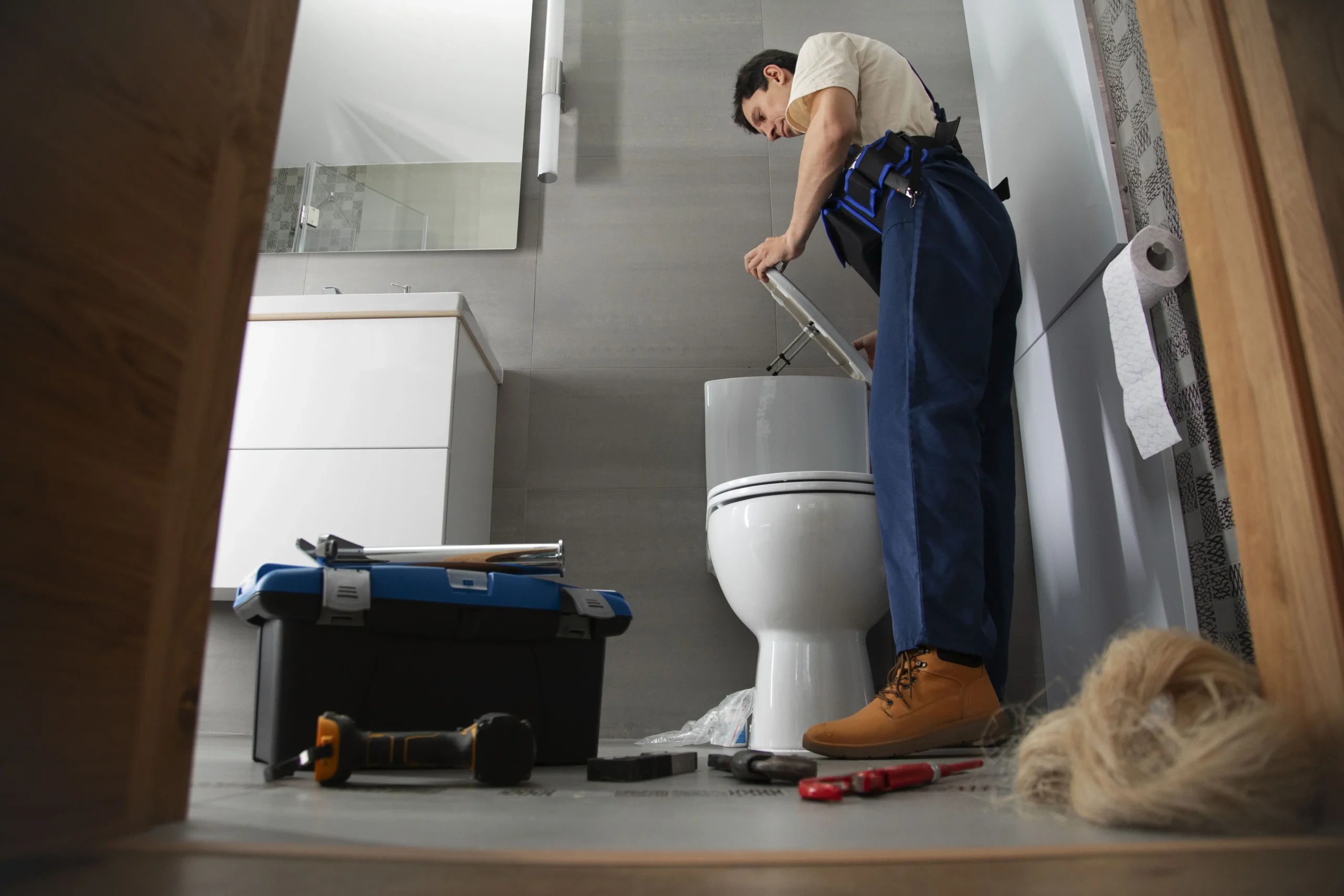
To unclog a toilet with a plunger, use a flanged toilet plunger, make sure the head is fully submerged, and plunge firmly up and down 7–10 times before pulling up quickly to break the clog. Without a plunger, pour a generous amount of dish soap into the bowl followed by hot (not boiling) water, let it sit for 15–20 minutes, then flush. The soap helps lubricate and break down the blockage.
A clogged toilet is one of those problems that feels urgent the moment it happens. The instinct to flush again and again usually makes things worse, risking an overflow. Knowing how to unclog a toilet properly — whether you have a plunger handy or not — turns a stressful moment into a five-minute fix.
Step 1: Stop the Water From Rising
If the bowl is filling up dangerously high, don’t flush again. Instead:
- Remove the tank lid
- Locate the chain connecting the flush handle to the rubber flapper at the bottom of the tank
- Unhook the chain or hold the flapper down manually to stop more water from entering the bowl
This buys you time to work on the clog without risking an overflow onto the floor.
Step 2: Remove Excess Water if Needed
If the bowl is very full, use a disposable cup or small container (with gloves on) to scoop some water into a bucket before attempting any of the methods below. Working with a partially full bowl makes most unclogging methods more effective and far less messy.
How to Unclog a Toilet With a Plunger
- Use a flanged toilet plunger if you have one — the extra flap of rubber creates a much better seal in the drain than a flat sink plunger
- Make sure there’s enough water in the bowl to fully cover the plunger’s rubber head
- Position the plunger directly over the drain hole and push down gently at first to release trapped air, then plunge vigorously up and down 7 to 10 times
- Pull up quickly on the final motion to help break the clog loose through suction, rather than just pushing it further down
- Flush to check if the water drains normally; repeat the process if the clog hasn’t fully cleared
How to Unclog a Toilet Without a Plunger
If there’s no plunger around, several household methods work surprisingly well.
Method 1: Dish Soap and Hot Water
- Pour about ¼ cup of liquid dish soap into the bowl
- Let it sit for 10 to 15 minutes so it can work its way around the clog and act as a lubricant
- Slowly pour in a gallon of hot water from the sink or tub — not boiling water, which can crack porcelain
- Wait a few more minutes, then flush to see if the blockage clears
Method 2: Baking Soda and Vinegar
- Pour one cup of baking soda into the bowl, covering as much of the surface as possible
- Slowly add two cups of white vinegar — it will fizz as the two react
- Let the mixture sit for about an hour (some clogs respond better left overnight)
- Flush to check whether the clog has cleared
Method 3: A Plastic Bottle as an Improvised Plunger
- Take an empty plastic bottle (a two-liter soda bottle works well) and remove the cap
- Insert the bottle upside down into the drain opening, creating as tight a seal as you can
- Squeeze the bottle firmly and quickly — this forces air into the pipe, which can dislodge the clog much like a plunger would
Method 4: A Wire Hanger “Snake”
- Unfold a wire hanger into as straight a line as possible, keeping a small hook at one end
- Wrap the hooked end in a cloth or old sock to protect the porcelain from scratches
- Feed it into the drain and gently twist and push to break up or hook onto whatever is causing the clog
- Withdraw carefully, and flush to check the result
Method 5: A Toilet Brush (Improvised Plunger)
If a toilet brush is all you have, angle it down into the drain hole and use it like a plunger — push and pull several times firmly. It’s not as effective as a real plunger, but it can work for softer, less severe clogs.
What Not to Do
- Don’t flush repeatedly hoping the clog clears on its own — this is the most common cause of overflow
- Don’t use boiling water — it can crack porcelain toilets; hot tap water is enough
- Don’t mix cleaning chemicals (like bleach and ammonia-based products) while trying different methods, since combining certain chemicals can produce dangerous fumes
When It’s Not a Simple Clog
If none of the above methods work after a couple of attempts, the blockage may be further down the pipe than a plunger or DIY method can reach, or it may involve something that shouldn’t have been flushed in the first place (toys, sanitary products, excessive paper). At this point:
- A toilet auger (also called a closet auger) is a longer, more rigid tool designed to reach further into the drain than a standard plunger
- If an auger doesn’t clear it either, it’s time to call a plumber rather than risk damaging the toilet or pipes with more aggressive DIY attempts
Preventing Future Clogs
- Avoid flushing anything other than toilet paper and waste — wipes, paper towels, and “flushable” wipes are common clog culprits despite the label
- Use less toilet paper per flush if your toilet has a history of clogging easily
- Consider a periodic baking soda and vinegar flush as light preventive maintenance, especially in older toilets with weaker flush power
For the rest of your bathroom’s regular cleaning routine, our deep cleaning checklist covers what to tackle weekly and monthly to keep things running smoothly.
FAQs About How to Unclog a Toilet
How do I unclog a toilet fast without a plunger?
Dish soap followed by hot (not boiling) water is the fastest household method — let the soap sit for 10-15 minutes first so it can help lubricate and break down the clog before adding water.
Is it bad to keep flushing a clogged toilet?
Yes. Repeated flushing risks an overflow, since the water has nowhere to go if the clog isn’t clearing. Stop flushing and try one of the unclogging methods first.
Can hot water crack a toilet bowl?
Boiling water can crack porcelain due to the sudden temperature change. Hot tap water is safe and effective; just avoid water straight from a boiling kettle.
When should I call a plumber for a clogged toilet?
If a plunger, dish soap, or a toilet auger doesn’t clear the clog after a couple of attempts, or if the same toilet keeps clogging repeatedly, it’s worth calling a plumber to check for a deeper blockage.
Final Thoughts
Knowing how to unclog a toilet with or without a plunger turns a panicked moment into a manageable one. Start with a plunger if you have one, and if not, dish soap and hot water solves the majority of everyday clogs without any special tools at all. This is one of several basic home repairs every homeowner should know — see the full guide for more.