
Simple Steps to Reduce Everyday Environmental Exposures This is a guest contribution from Clean Water Revival.
By Dr. Roy M. Speiser
Water Quality Specialist, CWR Environmental Products
We often think of our homes as safe havens from pollution. Yet environmental contaminants can enter through the water we drink, the air we breathe, household products, building materials and even the furnishings we bring indoors.
Thousands of chemicals are used in manufacturing, agriculture and consumer products. Improved laboratory technology now allows scientists to detect substances in our environment at extremely small concentrations.
Finding a chemical does not automatically mean it will cause illness. Health effects depend on the substance, concentration, duration of exposure and individual susceptibility. However, there are practical steps homeowners can take to reduce unnecessary exposure.
The goal is not to fear our environment. It is to understand what may be around us and make better-informed choices for a healthier home.
Start With the Water Coming into Your Home
Municipal drinking water in the United States is treated and regulated under federal and state standards. But meeting drinking-water standards does not mean the water reaching your home is completely free of contaminants.
What Could Be in Your Water?
Water quality varies considerably from one community to another. Depending on the source water and treatment process, testing may detect arsenic, lead, uranium and other radionuclides, disinfection by-products, nitrates, pesticides and industrial chemicals.
There is also growing scientific attention surrounding contaminants of emerging concern, including PFAS, pharmaceuticals, microplastics and endocrine-disrupting chemicals.
That is why the first question homeowners should ask is not simply:
“Which water filter should I buy?”
A better question is:
“What is actually in my water?”
Why Some Water Contaminants Matter
Finding a contaminant in water does not mean it will cause disease. However, research on several drinking-water contaminants provide good reasons to minimize unnecessary long-term exposure.
Lead and the Developing Brain
Lead is one of the best-established environmental neurotoxins. Children are particularly vulnerable because their brains and nervous systems are still developing.
There is no known safe blood lead level in children. Even relatively low exposure has been associated with lower IQ, reduced attention, learning difficulties, behavioral problems and poorer academic achievement.
Lead can enter drinking water through lead service lines, older plumbing, solder, faucets and fixtures. Reducing exposure is especially important in homes with young children.
PFAS and Drinking Water
Per- and polyfluoroalkyl substances (PFAS), commonly called “forever chemicals,” have been used for decades in industrial processes and consumer products. Because some PFAS persist for long periods in the environment and the human body, they have become an important drinking-water concern.
Years ago, EPA guidance for PFOA and PFOS was 70 parts per trillion. In 2024, EPA established federal drinking-water limits of 4 parts per trillion for PFOA and 4 parts per trillion for PFOS—an enormous change from the earlier health advisory.
The lesson for consumers is important: water quality is not a static issue. Scientific knowledge advances, testing improves, new contaminants are identified and drinking-water standards change.
Microplastics and Brain Health
Microplastics and even smaller nano-plastics have become an important emerging area of research. Scientists have detected these extremely small plastic particles in human tissues and organs, including the brain.
Researchers are investigating whether their accumulation may contribute to inflammation, oxidative stress and other biological changes that could affect health. The long-term effects in humans are not yet fully understood, making this an important area of continuing research.
Know What Is in Your Water Before Choosing Filtration
Most public water utilities publish an annual Consumer Confidence Report, or water-quality report, identifying the water source and regulated contaminants that were detected.
Homes supplied by private wells require a different approach because the homeowner is responsible for testing the water.
If a report or laboratory test identifies contaminants of concern, a qualified water-quality professional can help interpret the findings and determine which treatment technologies are appropriate.
Different filtration technologies address different problems. Activated carbon, specialty adsorption media, ion exchange, reverse osmosis, sediment filtration and ultraviolet treatment each have strengths and limitations.
A simple pitcher or one-size-fits-all filtration system should not automatically be assumed to address everything that may be present in a particular water supply.
Identify what is present first. Then match the filtration technology to the contaminants you want to reduce.
Improve the Air Inside Your Home
Water is only one part of our daily environmental exposure.
Indoor air may contain pollutants originating from cooking, cleaning products, furniture, carpeting, paints, pesticides, fragrances, combustion appliances, outdoor pollution and excessive moisture.
Volatile organic compounds (VOCs) can evaporate into the air from certain products and building materials. Adequate ventilation is particularly important when painting, remodeling or using products that release VOCs.
A practical approach to healthier indoor air is straightforward:
Reduce pollutants at their source, ventilate appropriately and use effective air filtration when needed.
Maintaining heating and air-conditioning equipment and changing filters as recommended can also help improve indoor air quality.
Choose Household Products More Carefully
The products we use every day can influence the indoor environment.
When purchasing cleaning products, consumers can look for the EPA Safer Choice label, which identifies products that meet EPA criteria for safer chemical ingredients.
For many routine cleaning jobs, simpler products may also be sufficient. Using more chemicals does not necessarily mean a home is cleaner or healthier.
Never mix bleach with ammonia or other household cleaning chemicals. Combining cleaning products can release dangerous gases.
Consumers may also want to consider the materials used in furnishings, carpeting, paints, fragrances and cookware when trying to reduce unnecessary chemical exposures in the home.
Reduce Pesticide Exposure
Pesticides can be useful when necessary, but prevention should often be the first line of defense.
Before routinely spraying pesticides, consider sealing cracks, repairing screens, eliminating standing water, properly storing food and removing conditions that attract pests.
An approach known as integrated pest management combines prevention, monitoring and targeted treatment and can help reduce unnecessary pesticide use.
Control Moisture and Mold
A healthy home should also be a dry home.
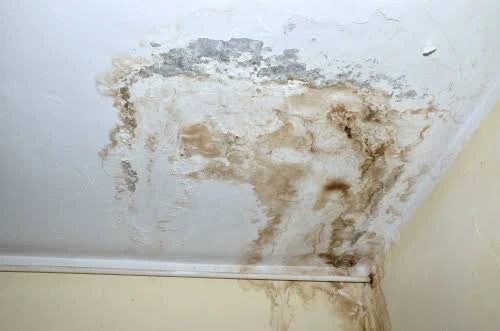
Roof leaks, plumbing leaks, condensation and excessive humidity can encourage mold growth and negatively affect indoor air quality.
Finding and correcting the source of moisture is more effective than repeatedly cleaning visible mold without addressing the underlying problem.
Six Simple Steps for a Healthier Home
1. Know your water. Read your municipal water-quality report or have your private well tested.
2. Use appropriate water filtration. Select treatment technology based on the contaminants you are trying to reduce.
3. Improve indoor air. Maintain HVAC equipment, control moisture, ventilate appropriately and consider air filtration when needed.
4. Reduce unnecessary chemical products. Choose simpler products or EPA Safer Choice products when practical.
5. Use pesticides carefully. Begin with prevention and nonchemical approaches whenever possible.
6. Pay attention to what enters your home. Paints, furnishings, fragrances, cleaning products and other materials can all influence your indoor environment.
A Healthier Home Begins with Awareness
We cannot eliminate every environmental contaminant from modern life, and the detection of a chemical does not automatically mean it poses a health threat.
What we can do is reduce unnecessary exposure.
The water we drink and bathe in, the air we breathe and the environment in which we live are all part of our personal health story. Understanding those exposures allows us to make more informed decisions for ourselves and our families.
Know what is in your environment, reduce what you can, and use the best available science and technology to create a cleaner, healthier home.
About Dr. Roy M. Speiser
Dr. Roy M. Speiser is Vice President and co-founder of Clean Water Revival (CWR Environmental Products) and a Water Quality Specialist with more than 35 years of experience studying water quality, environmental contaminants and filtration technologies.
At Clean Water Revival, the approach for decades has been to review available water-quality information before recommending filtration rather than assuming one system is appropriate for every home.
For a Free Water Evaluation, complete our short Online Water Questionnaire.